Paper Tiger
A research project aimed at preventing and supporting young people for whom anxiety is debilitating

Context
As part of a research project, we worked on the first phase of the double diamond method: exploring and defining the causes, impacts and needs related to anxiety among young women aged 18 to 25. This research aimed to lay the foundations for potential support and symptom management mechanisms that could be used by a future start-up collaborating with public actors.
The problem identified is alarming: in France, in 2021, 20.8% of young adults (aged 18-24) were affected by episodes of depression. Anxiety and depression syndromes are strongly correlated. Young women generally have poorer mental health and lower levels of well-being than young men. This research therefore responded to a need: to better understand the causes of anxiety, its repercussions and the expectations of young women in order to identify ways to improve the support they receive.
Role and responsibilities
With Luna and Anaïs, there were three of us UX Researchers working on this research project. The findings were presented collectively to three professionals.
Approach
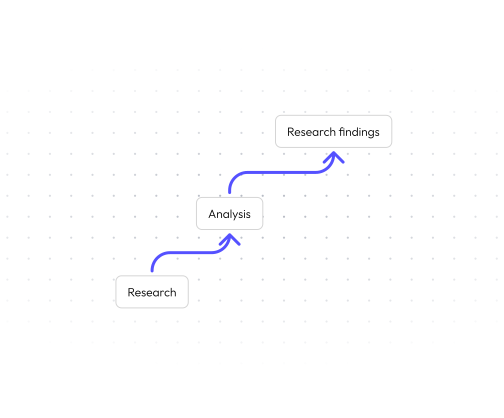
Our approach was structured around the following steps:
- Documentary research and definition of the scope of the study focusing on anxiety among young people;
- Preparation of the interview guide and recruitment of participants;
- Conducting interviews, transcribing and analysing qualitative data;
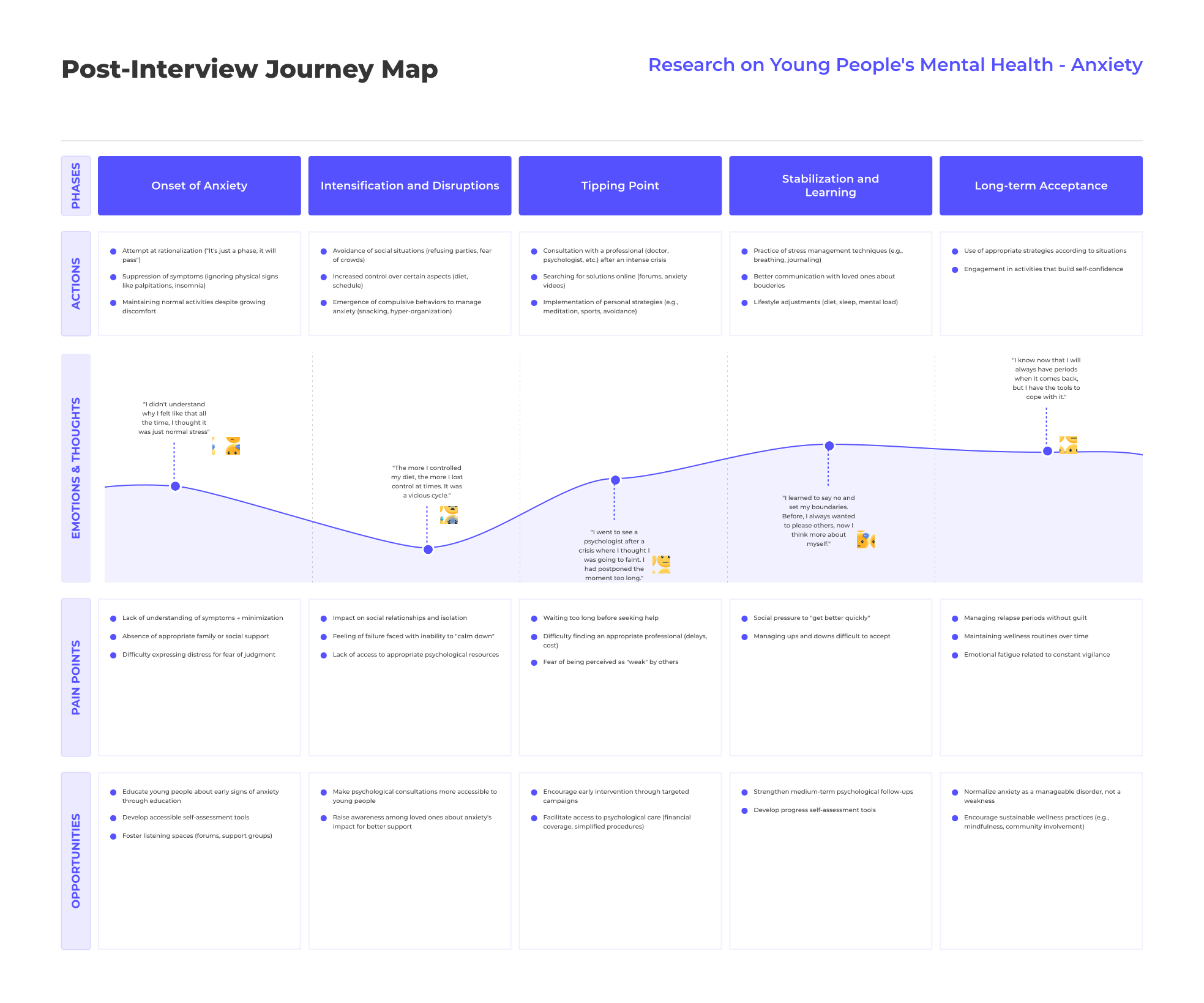
- Formalisation of insights in the form of a persona and a journey map tracing the typical journey: onset of symptoms, intensification, tipping point, stabilisation, acceptance;
- Synthesis and recommendations based on the analyses.
- Formulation of the final question “How Might We?” to feed into the second phase of the double diamond.
The scoping, recruitment, interviews, analysis and reporting were completed in four weeks. We interviewed four young women aged between 18 and 24 in semi-structured interviews.
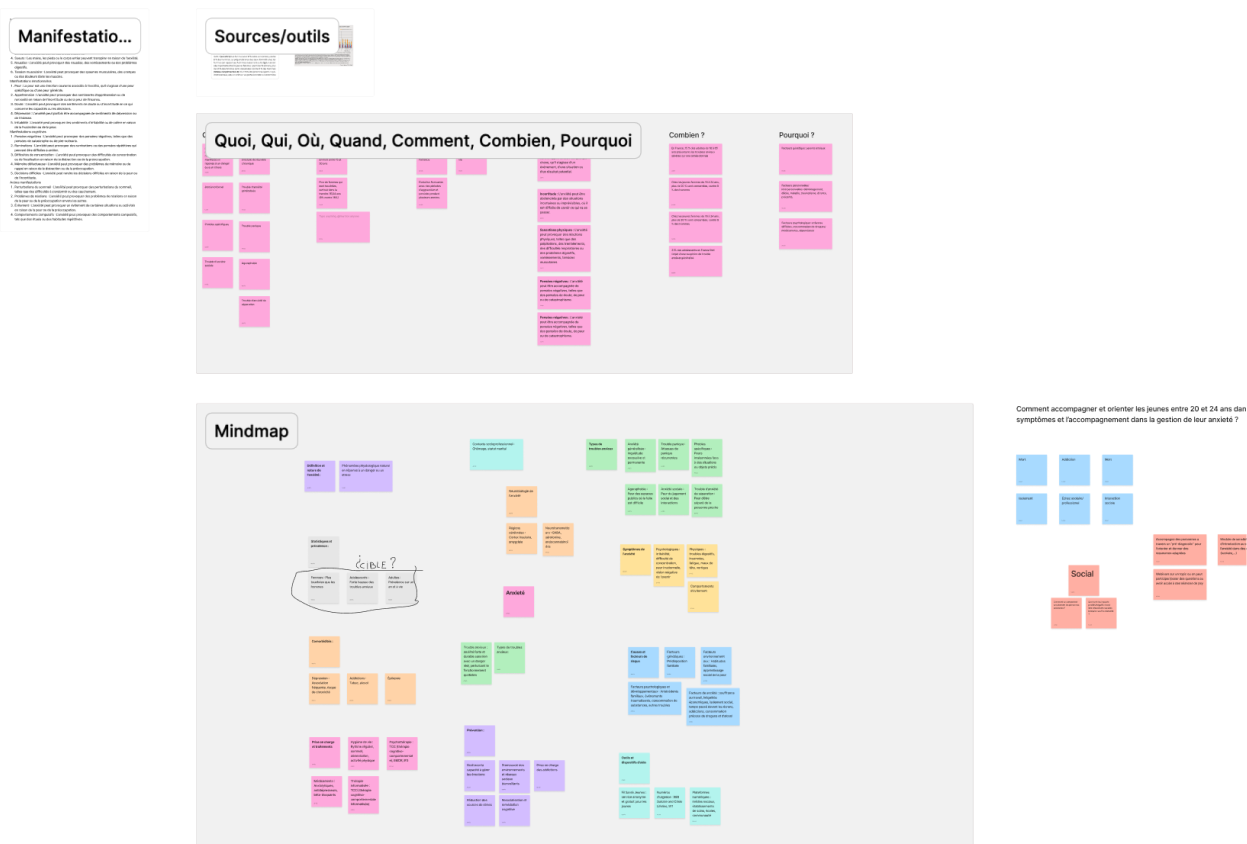
We used Notion to centralise our documentary research and prepare for the interviews. For the transcription and analysis of the interviews, we used Condens.io, and finally, to collaborate effectively and structure our ideas, we used Figjam.
During the research project, we encountered a few challenges, particularly in recruiting participants for the interviews, where we would have liked to have been able to call on a panelist.
Research hypothesis
Hypothesis 1
Young people aged 18–25 experience heightened anxiety due to academic (or professional) expectations and social norms.
Hypothesis 2
Anxiety often manifests itself through physical and behavioural symptoms (social isolation, phobias).
Hypothesis 3
There is a social stigma surrounding anxiety and seeking psychological support, which influences access to resources.
Key findings
Two markers of anxiety are detectable in school settings and are linked to a lack of self-confidence and belief in one's ability to succeed.
Over-adjustment strategy
Affects 2 out of 4 individuals
- Overachievement at school
- Fear of failure
- Negative thoughts
Verbatims
- “So I felt guilty, and I worked even harder.”
- “A lot of stress around academic performance.”
Avoidance strategy
Affects 2 out of 4 individuals
- Skipping school
- Academic failure
- Isolation
Verbatims
- “I almost dropped out of school because of it.”
- “At first, I was skipping classes and stuff.”
Deliverables
We produced:
- a report detailing the context, assumptions, methodology, interview guide, analysis results, recommendations and final issues;
- a persona representing the young women interviewed;
- a user journey map tracing the key stages of the anxiety experience;
- appendices including definitions of key concepts and diagrams of the risk factors and consequences of anxiety.
These deliverables provide a clear and actionable basis for guiding future solutions in terms of prevention and support.
Download the research paper (.pdf)